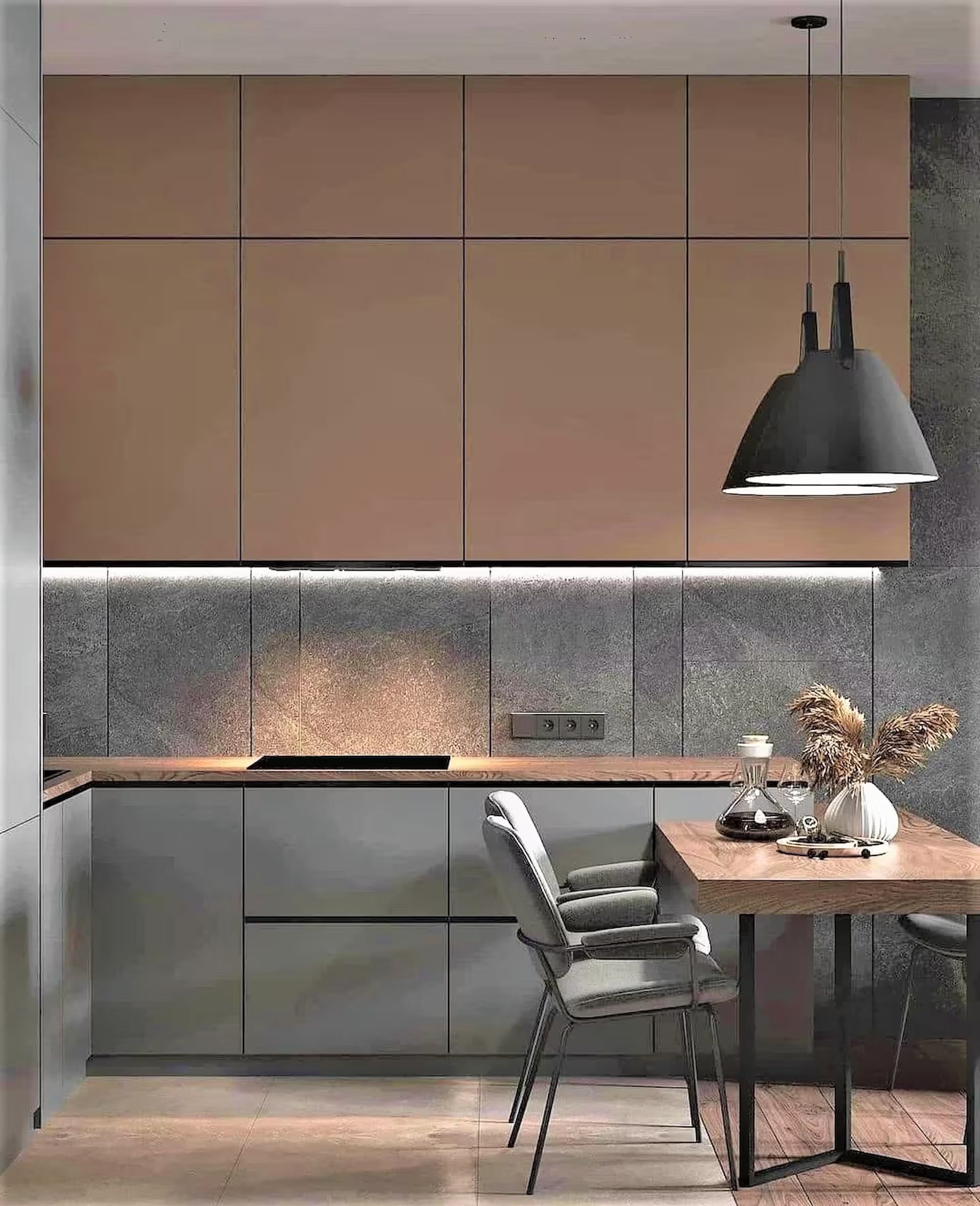
Kitchen Island: The New Definition of the Heart of the Home
A kitchen island is more than just a work surface: it's the architectural centrepiece of your home. Discover how bespoke design transforms it into an expression of identity.
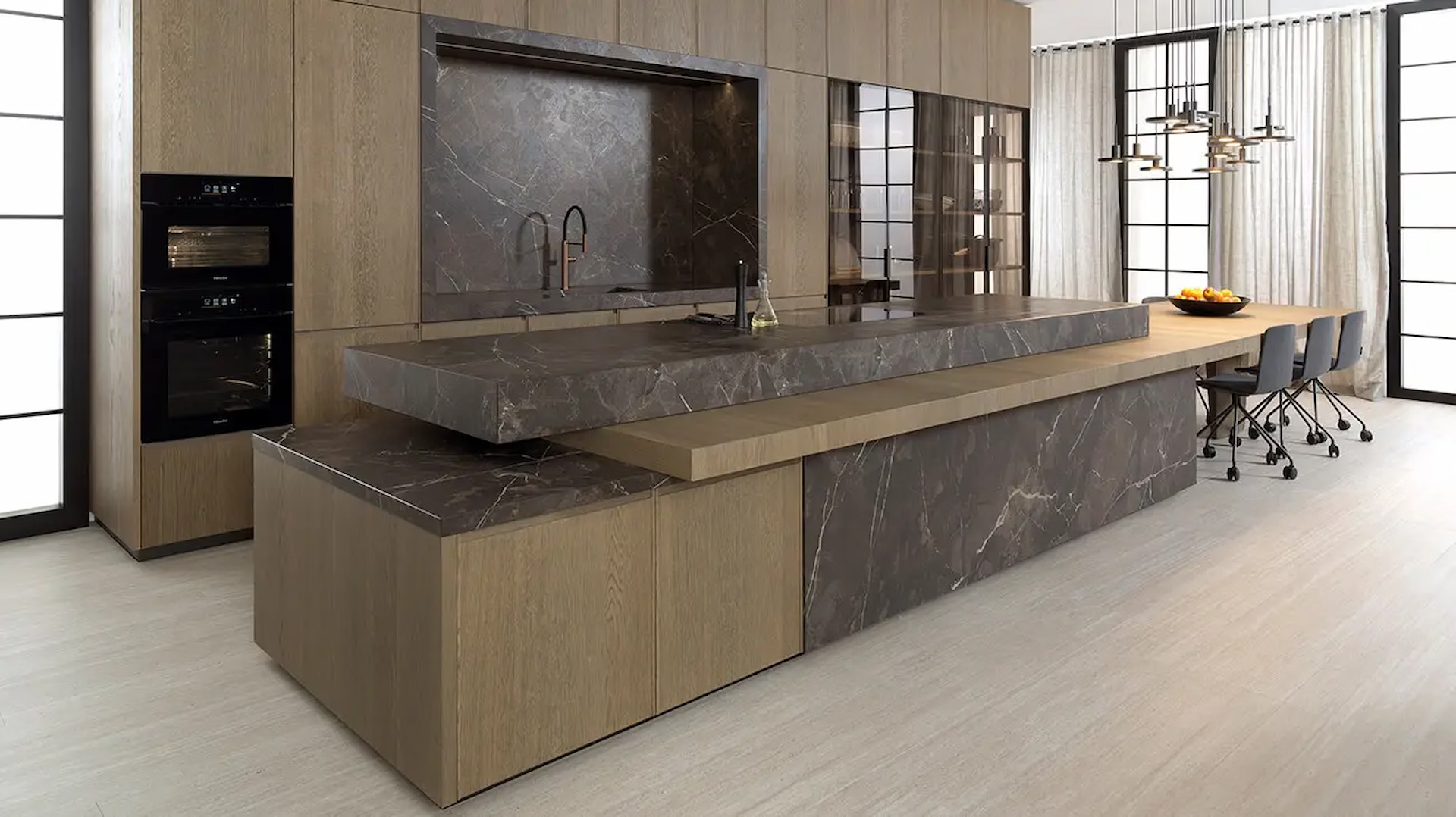
There is a point in every home where space acquires meaning. It’s where the family gathers in the morning, where the first glass of wine is poured when friends arrive, where conversations that started elsewhere find their conclusion. In 2026, this point is no longer just a functional choice. It is the kitchen island, reimagined as the architectural centrepiece of the home.
From Work Surface to Design Statement
The classic conception of the island as a rectangular block of surface belongs to the past. What defines modern design in 2026 is the island as a living sculpture within the space: with curved lines that soften the room’s geometry, with materials that tell stories, and with dimensions tailored precisely to the way you live.
This is not a passing trend. It is a maturity in the philosophy of interior space, an understanding that a piece of furniture designed specifically for you resembles no other and should not.
Three Island Characters for Three Ways of Life
The Island as a Gathering Place
For open-plan homes where the kitchen converses with the living room, the island functions as an invisible divider that doesn’t divide. It is designed lower, to maintain visual continuity, and extends into a form that becomes table, serving area, and backdrop for every occasion. The worktop material makes all the difference here: a sheet of sintered stone in a light marble shade gives immediacy and a sense of precision without excluding warmth.
The Island as a Culinary Atelier
For those who treat cooking as a creative practice, the island becomes a precision instrument. Here, the integrated induction hob disappears into the surface, drawers are organised with surgical logic, and central drainage is installed discreetly beneath a flush-mounted sink. Base cabinets are designed with deep drawers rather than doors, a detail that completely changes the way the space is used.
The Island as a Silent Statement of Elegance
In high-aesthetic kitchens, the island makes no noise. It doesn’t host knick-knacks or display appliances. It exists as a single, flawless plane, typically in Corian or natural marble, that simply is there, impressive in its restrained presence. The perimeter lighting, almost invisible, gives the island weight and dimension without revealing its mechanics.
The Materials That Define Character
The design of an island always begins with the surface material, because that is what you touch every day.
Corian: The ultimate choice for those who want a seamless result: no joints, no interruptions, with a sink born from the same surface as if it had always been there. Renewable, ageless, supremely functional.
Sintered Stone (Neolith, Dekton): For surfaces that must withstand use without ever losing their appearance. Large seamless slabs, the image of stone or concrete in a depth that doesn’t pretend: it simply is.
Natural Marble: A choice for those who accept that a material with life also has history. Every marble island is unique, precisely because it cannot be replicated.
Warm Wood: In combination with other materials (marble or steel), a natural wood worktop gives the space a human scale. It is not traditional, it is contrarian, and that is what makes it interesting.
Why Personalisation Is Not a Luxury, It Is Logic
A catalogue island is designed for the average space, the average life, the average user. But no space is average, and no way of life is typical.
Bespoke design means the island has exactly the centimetres the space requires, that the worktop height has been calculated for your height, that the drawers open in the right direction, and that the worktop material converses with the rest of the house, not just the rest of the kitchen.
This is what we do at The Kitchen Studio. We design kitchens that belong to the space they were built for, because there is no other space for them.
Some Questions Worth Answering Before You Design
Before beginning a conversation with any designer, it is worth having thought about:
- How many people use the kitchen simultaneously? This determines the clearance around the island and the number of hobs.
- Do you eat at the island or at a separate table? This affects its height and extension.
- Do you want the food preparation to be hidden or on show? This determines whether you have a sink or hob in the island.
- What is your relationship with nature? Natural materials or technological surfaces, the choice says a great deal.
There are no right or wrong answers. There are only your answers, and the design of the island starts there.
Visit The Kitchen Studio showroom and see our islands in person: materials, proportions, details that don’t come through in photographs.
Book an appointment for a personal consultation or view our work for inspiration.
The Kitchen Studio
The Kitchen Studio Team